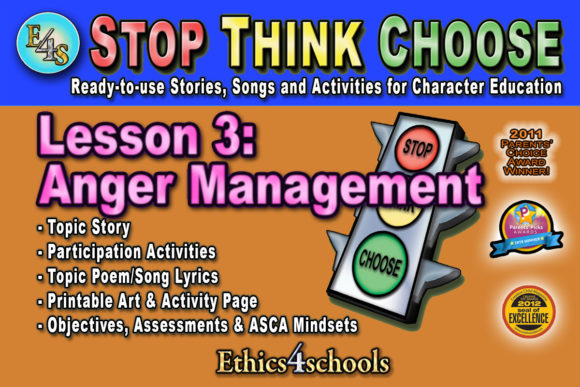
Strategic Emotional Regulation: Leveraging Module 3 - Anger Management for Long-Term Development
In the architecture of character education, emotional regulation is not merely a soft skill; it is a foundational competency that dictates future decision-making capabilities. Module 3 - Anger Management, part of the comprehensive bundle from Ethics4school’s Stop Think Choose Character Education Book, offers a structured approach to teaching self-control to children ages two through ten. For educators, counselors, and parents, this module represents more than a collection of activities; it is a strategic tool for instilling cognitive behavioral patterns that persist into adulthood. By integrating storytelling, music, art, and assessment, the module aligns with the American School Counselor Association’s (ASCA) objectives, providing a measurable framework for emotional intelligence.
The Strategic Value of Early Intervention
Understanding Module 3 - Anger Management requires recognizing that anger is a signal, not a defect. The module’s primary utility lies in its ability to decouple the physiological response to frustration from the behavioral reaction. For professionals involved in child development, the goal is not suppression but regulation. When children learn to manage anger effectively, they preserve cognitive resources for learning, social negotiation, and creative problem-solving. This has long-term implications for academic performance and workplace readiness.
The module utilizes the "Stop, Think, Choose" methodology, a heuristic that simplifies complex emotional processing into actionable steps. This mirrors adult executive function strategies used in high-stakes business environments. By introducing these concepts early, we are essentially training the brain’s prefrontal cortex to override the amygdala’s immediate threat response. The strategic advantage here is clear: children who master this triad are better equipped to handle conflict, negotiate peers, and maintain focus under pressure.
Core Components and Methodological Approach
The effectiveness of Module 3 - Anger Management stems from its multi-modal delivery system. It does not rely on didactic lecturing, which often fails with young learners. Instead, it employs a blend of auditory, visual, and kinesthetic learning tools.
- Narrative Modeling: The module uses a compelling story to model anger management techniques. Narratives allow children to observe consequences and solutions in a low-stakes environment, fostering empathy and understanding before personal application.
- Auditory Reinforcement: Full-sing and karaoke songs serve as mnemonic devices. Music engages different neural pathways, making the concepts of breathing and counting more memorable and accessible during moments of high arousal.
- Somatic Techniques: Breathing exercises and counting strategies provide immediate, physical tools for de-escalation. These are practical interventions that children can deploy independently.
- Creative Expression: Art activities allow for the externalization of emotion. Drawing or crafting feelings helps children process abstract internal states into tangible forms, facilitating discussion and reflection.
This diversified approach ensures that the content resonates with various learning styles, increasing the likelihood of retention and application. For educators, this means less time spent on remedial behavior correction and more time on instructional goals.
Alignment with ASCA Mindsets and Behaviors
For school counselors and administrative leaders, alignment with established standards is critical for program justification and funding. Module 3 - Anger Management directly supports the American School Counselor Association’s Mindsets and Behaviors Program Planning Tool. Specifically, it addresses competencies related to self-management skills and social skills.
The module helps students develop the mindset that challenges are manageable through appropriate strategies. It reinforces behaviors such as using coping skills when facing stress and demonstrating self-discipline. By mapping the module’s activities to ASCA standards, educators can document progress and demonstrate the tangible impact of their character education initiatives. This alignment transforms subjective observations of behavior into objective data points for student growth.
Implementation Strategy: Context and Timing
Deploying Module 3 - Anger Management requires strategic timing. It should not be introduced solely as a reactive measure after an incident occurs. Instead, it functions best as a proactive curriculum component. Introduce the concepts during periods of calm, allowing children to practice breathing and counting without the interference of acute emotion. This builds muscle memory for the techniques.
Consider the following implementation phases:
- Introduction Phase: Use the story and songs to introduce the concept of anger as a normal emotion. Establish the vocabulary of "Stop, Think, Choose."
- Practice Phase: Engage in art activities and guided breathing exercises. Make these routine parts of the day, such as during transitions or morning circles.
- Application Phase: When minor conflicts arise, prompt students to recall the module’s strategies. Reference the story characters to reinforce the connection.
- Assessment Phase: Utilize the included assessment questions to gauge understanding. These questions help identify which students have internalized the concepts and which require additional support.
This phased approach ensures that the tools are familiar and accessible when needed most. It shifts the dynamic from punitive correction to collaborative problem-solving.
Risks of Unstructured Application
While Module 3 - Anger Management is robust, its effectiveness depends on intentional use. One significant risk is treating the module as a standalone fix without broader contextual support. If the surrounding environment does not model emotional regulation, the lessons may fail to take root. Children observe adult behavior closely; if educators or parents react to stress with outbursts, the module’s credibility diminishes.
Another risk is over-reliance on the techniques without addressing underlying causes. Anger is often a secondary emotion masking fear, sadness, or frustration. While breathing and counting manage the immediate symptom, they do not resolve the root issue. Educators must use the assessment questions to dig deeper, identifying patterns that may require individualized intervention or family engagement. Using the module mechanically, without empathy or insight, reduces it to a behavioral compliance tool rather than a character-building resource.
Long-Term Outcomes and Decision-Making
The ultimate goal of Module 3 - Anger Management is to foster autonomous decision-makers. Children who can pause and choose their response are better positioned for success in academic and social realms. They exhibit higher levels of resilience, adaptability, and interpersonal effectiveness. For entrepreneurs and leaders investing in educational resources, this translates to a higher return on investment in terms of student outcomes and classroom climate.
Furthermore, the skills learned here are transferable. The ability to regulate emotion is crucial for creativity, as it allows individuals to tolerate the ambiguity and frustration inherent in the creative process. It enhances productivity by reducing time lost to conflict and distraction. In customer experience and service roles, these early lessons lay the groundwork for empathy and patience, key drivers of satisfaction and loyalty.
Practical Guidance for Educators and Parents
To maximize the impact of Module 3 - Anger Management, consider these strategic adjustments:
- Customize the Narrative: Relate the story examples to real-life scenarios relevant to your specific group. If children are struggling with sharing toys, highlight that aspect of the story.
- Integrate Across Subjects: Use the breathing techniques before tests or challenging tasks. Reference the "Stop, Think, Choose" framework during literature discussions or history lessons involving conflict.
- Engage Families: Share the songs and activities with parents. Consistency between home and school reinforces the learning and creates a unified support system.
- Monitor Progress: Use the assessment tools regularly to track changes in behavior. Look for reductions in frequency and intensity of outbursts, as well as increases in self-initiated calming strategies.
By approaching Module 3 - Anger Management with intentionality and strategic foresight, educators and parents can cultivate a generation of emotionally intelligent individuals. The module provides the tools, but the consistent, thoughtful application determines the outcome. It is not just about managing anger; it is about empowering children to navigate their inner worlds with confidence and clarity, setting the stage for lifelong success.