Strategic Foundations: Leveraging the Alphabet Numbers Tracing Book for Kids in Early Development
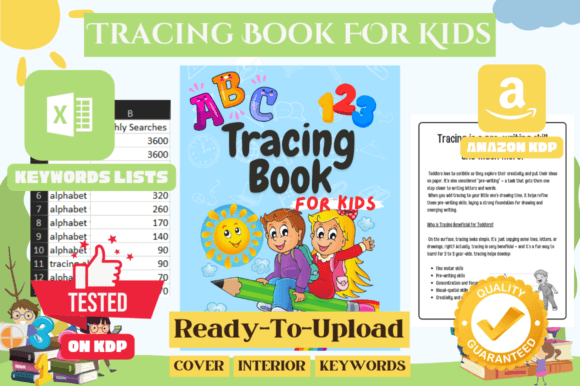
In the landscape of early childhood education, the tools we select often dictate the trajectory of a child’s foundational skills. While digital interfaces dominate modern learning environments, tactile, hands-on resources remain indispensable for developing fine motor control and cognitive retention. The Alphabet Numbers Tracing Book for Kids represents more than a simple collection of worksheets; it is a structured intervention designed to bridge the gap between abstract recognition and physical execution. For parents, educators, and caregivers focused on long-term educational outcomes, understanding how to deploy this resource strategically can significantly enhance a child’s handwriting proficiency, pen control, and overall confidence in literacy.
Handwriting is not merely an aesthetic skill; it is a complex neurological process that integrates visual perception, motor planning, and muscle memory. When a child struggles with letter formation, it often creates friction in broader academic tasks. By introducing a high-quality tracing tool early, you are not just teaching them to write; you are removing barriers to future communication and self-expression. This article explores how to maximize the utility of this tracing book, ensuring that every page turned contributes to measurable developmental progress.
The Strategic Value of Structured Tracing
Many adults assume that tracing is a passive activity. However, when approached with intention, it becomes an active exercise in precision and discipline. The Alphabet Numbers Tracing Book for Kids is engineered to hone pen control through a progressive curriculum. It begins not with complex letters, but with the fundamental building blocks of writing: lines, curves, and shapes. This scaffolding approach is critical. Just as a builder does not start with the roof, a young writer must master the straight line and the circle before attempting the intricate loops of a cursive 'l' or the sharp angles of a 'Z'.
From a strategic perspective, this method reduces frustration. Children who are asked to write full words before mastering basic strokes often develop poor grip habits or negative associations with writing tasks. By utilizing the book’s Part One section, which focuses on simple lines and adorable shapes, caregivers can assess a child’s current motor capabilities. This diagnostic phase allows for targeted support, ensuring that the child is physically ready for the demands of alphabet tracing in Part Two. The result is a smoother learning curve and higher quality outputs, reinforcing the child’s sense of competence.
Optimizing the Learning Environment for Maximum Retention
To achieve the best results, the context in which the Letter Tracing For Kids material is used matters as much as the material itself. A common mistake is treating the book as a babysitting tool rather than an educational instrument. For optimal outcomes, integrate the tracing sessions into a consistent routine. Consistency builds habit, and habit builds skill. Set aside dedicated time—perhaps fifteen minutes daily—where the focus is solely on the task at hand.
The physical setup also plays a crucial role. The book’s large 8.5″x11″ format is designed to provide ample space for movement, but it requires a stable surface. Ensure the child has proper posture, with feet flat on the floor and the paper positioned at a comfortable angle. This ergonomic consideration prevents strain and promotes better control. Furthermore, the act of coloring, which is integrated throughout the book’s sections on shapes, letters, and numbers, should not be rushed. Coloring within the lines reinforces boundary awareness and spatial reasoning, skills that are directly transferable to keeping letters proportional and spaced correctly in written text.
Navigating the Curriculum: A Phased Approach
The structure of the Alphabet Numbers Tracing Book for Kids offers a clear roadmap for progression. Understanding this flow allows caregivers to set realistic milestones and celebrate incremental victories.
- Phase One: Motor Foundation. Begin with simple lines and curves. Observe how the child holds the pencil. Are they gripping too tightly? Is their wrist rigid? Use this phase to correct grip issues before they become entrenched habits. The tracing of easy shapes serves as a low-stakes environment for practicing pressure control.
- Phase Two: Alphabet Mastery. Move to uppercase and lowercase letters A-Z. This section is not just about replication; it is about pattern recognition. Encourage the child to say the letter sound while tracing. This multisensory approach—combining touch, sight, and sound—strengthens neural pathways. The inclusion of simple words and funny activities keeps engagement high, preventing the monotony that often plagues repetitive drills.
- Phase Three: Numerical Literacy. Transition to numbers 0-9. Counting and coloring numbers helps associate the symbolic representation with quantitative concepts. This dual focus on literacy and numeracy ensures a well-rounded foundational skill set.
It is essential to note that this book requires guidance. A parent, teacher, or caregiver must be present to offer feedback. Without correction, a child may reinforce incorrect stroke orders or poor form. Your role is not to do the work for them, but to guide their hand metaphorically, offering verbal cues and positive reinforcement when they achieve precision.
Risks of Unstructured Use and How to Mitigate Them
While the Alphabet Numbers Tracing Book for Kids is a powerful tool, relying on it without a clear strategy can lead to diminishing returns. One significant risk is over-reliance on tracing as a crutch. If a child only ever writes within pre-printed guides, they may struggle to form letters independently on blank paper. To mitigate this, gradually fade the support. After completing a page of traced letters, ask the child to write the same letters on a blank sheet nearby. This transition from guided practice to independent application is where true learning solidifies.
Another risk is burnout. Pushing a child to complete multiple pages in one sitting can lead to resistance and fatigue. Quality outweighs quantity. Five minutes of focused, high-quality tracing is more valuable than thirty minutes of distracted scribbling. Monitor the child’s energy levels and attention span, adjusting the session length accordingly. The goal is to foster a love for writing, not to create an aversion to it.
Long-Term Impact on Communication and Confidence
Investing time in handwriting development yields dividends far beyond the classroom. Clear handwriting facilitates better communication. In academic settings, legible work is often graded more favorably because it reduces the cognitive load on the teacher. In personal contexts, the ability to write neatly boosts self-esteem. A child who feels proud of their work is more likely to engage willingly in writing tasks, creating a positive feedback loop of practice and improvement.
Moreover, the discipline learned through tracing translates to other areas of life. The patience required to stay within the lines, the attention to detail needed to form a perfect 'S', and the persistence to complete a page all contribute to character development. These soft skills—focus, diligence, and precision—are invaluable in any future endeavor, whether in creative arts, scientific inquiry, or professional operations.
Making the Decision to Invest in Quality Resources
When selecting educational materials, consider the longevity and versatility of the product. The Alphabet Numbers Tracing Book for Kids offers 120 pages of content, providing substantial value. Its beautiful cover and ready-to-upload PDF interior format suggest a professional level of design that appeals to children and reassures parents of its quality. Unlike disposable worksheets, this book serves as a comprehensive workbook that grows with the child.
For entrepreneurs and creators in the education space, this model demonstrates the importance of user-centric design. The inclusion of keywords based on Amazon monthly search results indicates a data-driven approach to meeting market needs. For the end-user, this means the content is aligned with what parents are actively seeking: effective, engaging, and comprehensive learning tools. By choosing a resource that has been optimized for both educational efficacy and user experience, you are making a strategic decision that supports your child’s success.
In conclusion, the Letter Tracing For Kids book is not just a purchase; it is an investment in your child’s foundational skills. By approaching it with a strategic mindset—focusing on proper technique, consistent practice, and gradual independence—you transform a simple tracing exercise into a powerful catalyst for lifelong learning. Let your child be the best writer they can be, starting with the deliberate, guided steps provided in this essential educational tool.