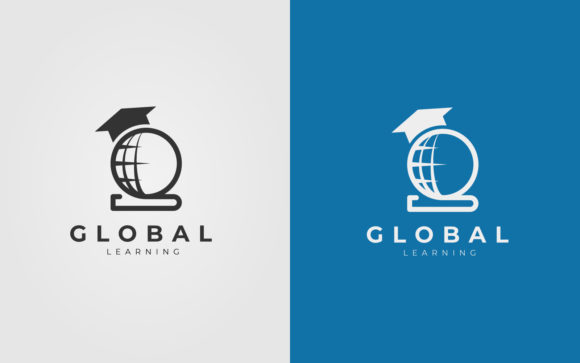
Visualizing Global Learning Logo Design with Book: A Strategic Approach to Educational Branding
In the rapidly expanding landscape of digital education, establishing a distinct visual identity is no longer optional; it is a fundamental component of institutional credibility. When an organization seeks to communicate its mission across borders, the Global Learning Logo Design with Book emerges as a powerful semiotic tool. This specific combination of imagery—the open book representing knowledge and the globe or sphere representing worldwide reach—creates an immediate cognitive link for audiences ranging from prospective students to corporate partners. Understanding how to leverage this design concept requires more than aesthetic appreciation; it demands a strategic understanding of vector graphics, color psychology, and scalable asset management.
The Semiotics of Knowledge and Reach
The integration of academic symbols into a cohesive brand mark serves a dual purpose. First, the book is a universal icon for learning, study, and information retention. It transcends language barriers, making it ideal for international audiences. Second, when paired with global elements such as a planet, earth, or sphere, the logo communicates scale. It suggests that the institution or platform is not confined by geography. This synergy is critical for online courses, universities offering distance learning, and educational technology companies aiming for market penetration in multiple continents.
Designers often incorporate additional elements like a graduation cap or hat to signify achievement and success. While the core concept revolves around the book and the globe, these supplementary icons add layers of meaning related to completion, mastery, and professional advancement. The resulting composition must remain balanced. Overcrowding the design with too many elements can dilute the message, whereas a minimalist approach ensures clarity and memorability. The goal is to create a sign that is instantly recognizable even at small sizes, such as on a mobile app icon or a social media avatar.
Technical Specifications for Professional Implementation
A common misconception among non-designers is that a logo is merely a static image. In reality, a professional Global Learning Logo Design With Book And Hat is a dynamic asset built on rigorous technical standards. To ensure versatility across various media, the underlying file structure is paramount. High-quality deliverables typically include EPS files, which are vector-based. Unlike raster images, vectors are mathematical representations of shapes, allowing them to be resized infinitely without any loss of quality. This is essential for applications ranging from massive billboards to tiny favicons.
Furthermore, resolution plays a critical role in print and digital fidelity. Standard deliverables should offer JPG files at 300 dpi (dots per inch) for high-quality printing needs. For digital screens, RGB color profiles are necessary to ensure vibrant and accurate display on monitors and smartphones. Conversely, CMYK color profiles are required for physical materials such as brochures, diplomas, and merchandise. The ability to switch between these color modes ensures that the brand maintains its integrity regardless of the medium. A 100% editable and resizable vector file empowers internal marketing teams to adapt the logo for specific campaigns without needing to commission new designs for every iteration.
Color Psychology and Adaptability
The choice of color in educational branding is rarely arbitrary. Blue, for instance, is frequently associated with trust, intelligence, and technology, making it a staple in the education sector. Green may symbolize growth and harmony, while orange can evoke creativity and energy. A well-constructed logo package allows for 100% color changeability. This feature is crucial for maintaining contrast against different backgrounds. For example, a light-colored logo may be needed for dark website headers, while a dark version is required for letterheads and official documents. The flexibility to adjust hues ensures that the visual identity remains consistent and legible in diverse contexts.
Applications Across Educational Sectors
The utility of a globally oriented educational logo extends far beyond traditional universities. Various sectors benefit from this specific visual language, each applying it to meet unique operational needs.
- Online Learning Platforms: For web-based course providers, the logo serves as the primary trust signal. Users need to feel confident that the platform offers legitimate, high-quality content. A professional design featuring a book and globe reinforces the idea of accessible, world-class education.
- Language Schools and Tutoring Services: These businesses rely heavily on the concept of crossing cultural boundaries. The global element in the logo visually supports their value proposition of connecting students with teachers from around the world.
- Educational Technology Startups: Companies developing software for schools or libraries need branding that bridges the gap between traditional pedagogy and modern innovation. The combination of classic symbols like books with clean, modern vector lines achieves this balance.
- International Conferences and Workshops: Temporary events often require strong branding to attract attendees. A versatile logo can be adapted for badges, banners, and digital presentations, creating a cohesive experience for participants.
The Importance of Vector Scalability in Digital Marketing
In an era where content is consumed on devices of varying screen sizes, scalability is non-negotiable. A logo designed on a 3200x2000 size artboard provides ample detail for high-resolution displays while retaining the structural integrity needed for downscaling. When a user views a course catalog on a tablet, the logo must remain crisp. If the same user prints a certificate of completion, the edges of the book and the curves of the globe must remain smooth, not pixelated. This is where the value of a 100% quality vector becomes evident. It future-proofs the brand, ensuring that as display technologies evolve, the visual identity does not become obsolete.
Moreover, vector files are generally smaller in file size compared to high-resolution raster images, which contributes to faster loading times on websites. Speed is a critical factor in user experience and search engine optimization. A lightweight SVG or optimized EPS file ensures that the brand’s visual elements do not hinder site performance, thereby supporting both aesthetic goals and technical SEO requirements.
Support and Customization in Brand Development
Acquiring a logo template is only the first step in brand development. The long-term viability of a visual identity depends on the support infrastructure surrounding it. Reliable designers and agencies offer anytime support to assist with implementation challenges. Whether it involves adjusting the spacing between the book and the globe or modifying the font weight to match a new tagline, ongoing assistance ensures that the brand evolves coherently. This level of service is particularly valuable for small businesses and startups that may not have an in-house design team.
Customization also extends to typography. The fonts used in conjunction with the logo icon must reflect the institution’s tone. Serif fonts may convey tradition and authority, suitable for established universities. Sans-serif fonts often appear more modern and approachable, fitting for innovative online academies. The ability to edit these textual elements alongside the graphic icon allows for a holistic branding approach. It ensures that the name of the academy, college, or company integrates seamlessly with the visual symbol, creating a unified mark that resonates with the target audience.
Strategic Considerations for Global Audiences
When deploying a Global Learning Logo Design with Book in international markets, cultural sensitivity is essential. While the book is a widely recognized symbol, its depiction can vary. Some cultures may associate specific colors or orientations with different meanings. Therefore, testing the logo in different regional contexts is advisable. The neutral, clean lines of a vector design help mitigate some of these risks by avoiding overly stylized or culturally specific artistic flourishes that might not translate well. The focus remains on the universal concepts of education and global connectivity.
Additionally, the logo must function effectively in monochrome. There will be instances where color printing is not feasible, such as in newspaper advertisements, faxes, or embossed seals on official documents. A robust design retains its recognizability even when stripped of color, relying solely on shape and contrast. This versatility is a hallmark of professional-grade logo design and is a key consideration for any educational entity aiming for broad accessibility and professional stature.
Ultimately, the investment in a high-quality, editable, and scalable logo is an investment in the institution’s perceived value. It signals professionalism, attention to detail, and a commitment to quality education. By leveraging the technical advantages of vector graphics and the semantic power of global educational symbols, organizations can build a brand identity that stands the test of time and resonates with learners across the globe.